Mental Illness: Boxing’s Loaded Gun
“What mental health needs is more sunlight, more candor, and more unashamed conversation.” – Glenn Close.
You are in a room, but in reality, you are miles away. Despite the sunshine, you only see the dark. When you should be happy you are anything but.
Tablets prescribed to make you feel human again, often make you feel even less human. You are encouraged to talk when it is the last thing you want to do. The stigma, the shame and the embarrassment makes the words you need to find so much more difficult.
There is no trigger point, it comes without warning, it goes, if you are lucky, again without reason. That’s what people who suffer from mental illness have to deal with on a daily basis.
The silent killer, the black dog on your shoulder, how can people understand what they can’t see or feel. They see it as weakness, ignorance adds to the pain and the suffering.
Suffering from mental illness is crippling in any walk of life, but imagine if you are a boxer and you have those problems. Perceived as being the toughest people on the planet, but they are often the most fragile.
Ricky Hatton went from being an undefeated world champion to very quickly being at rock bottom.
Losing to ring legends Floyd Mayweather and Manny Pacquiao was hardly a disgrace, but despite what people told him, Hatton saw it differently.
Hatton felt he had let people down and his life spiralled out of control, substance abuse replaced an addiction of another kind and suicidal thoughts entered his mind. Hatton survived, others haven’t been so fortunate.
I remember someone saying to me a few years ago:
“I just want to go to sleep and never wake up.”
That person sadly is no longer with us, the pain ended for one, but started immediately for those that were left behind.
Hatton had to return to the ring 3 years after that brutal loss to Pacquiao to try to conquer his demons, he needed a purpose, he needed release. The road to redemption ended in defeat, but finally, he could let his boxing career go, so his life could start again.
The British Boxing Board of Control have accepted the growing problem with mental health within the sport and are now signed up to the Mental Health Charter for Sport and Recreation.
‘Professional boxers are at increased risk of developing a mental health problem due to dealing with a number of challenges including the risk of injury, making weight, negotiating contracts, public scrutiny and media pressures, juggling dual careers and dealing with retirement along with the challenges of everyday life.’
Boxers have to deal with so much, so many highs and lows, the risks are far greater than most other professions, the rewards for many don’t replicate those risks. A short career and boxers are often cast aside for the next fighter in the conveyor belt of pugilist meat.
Life after boxing can be a lonely place, without the routine and the discipline, many become incomplete, a part of them never returns.
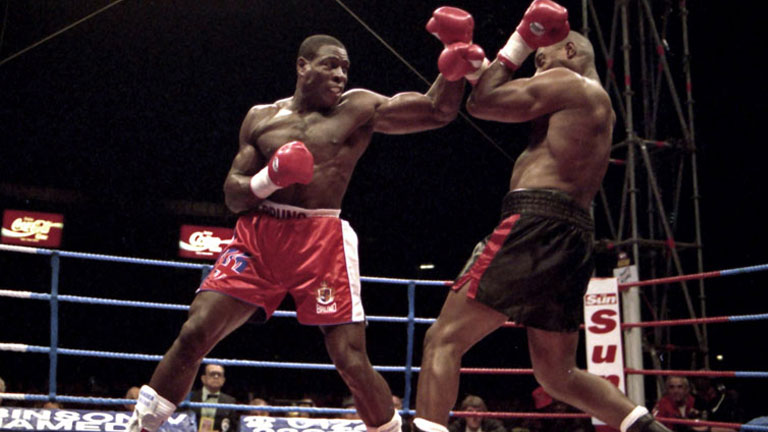
Frank Bruno was one minute living out his dream, finally, at the 4th attempt, he was the world heavyweight champion. But then his reign ended, like Hatton, his life then fell apart.
A descent into oblivion, Bruno had to cope without boxing, nothing could replace that adrenaline he got from the sport.
Mental illness sufferers are often the last to know or accept they need help, when they do it’s often too late.
In a short space of time Bruno lost his wife, his career, his trainer George Francis committed suicide. From boxing in front of thousands, Bruno was now alone, very soon he was being sectioned.
Thankfully Bruno and Hatton appear to be dealing with their problems, life might never be the same, but others will benefit from their struggles.
Tyson Fury is perhaps the most high profile recent example, Fury’s problems have raised mental illness awareness to a level we haven’t seen before, certainly in boxing. Fury has his critics, some shamelessly doubt the genuineness of his struggles, but he has helped so many, his pain will ease the pain of others.
Bruno, Hatton and Fury have since joined forces to raise awareness of mental illness through the Frank Bruno Foundation. All three have spoken openly about their struggles, their words are so important. From experience, if you accept there is a problem, then you can begin the fight back to some form of normality.
Jane Couch left boxing with many scars, but it’s the scars we don’t see that have affected her the most. Couch had to deal with plenty during her career, experiences that she says has left her damaged as a result. Couch went from fighting authority and her opponents to fighting her demons. Boxing grabs you in and spits you back out and rarely cares where you land.
The modern age adds social media to what fighters have to navigate. Twitter is at times a brutal unforgiving place, a phone or a keyboard makes people brave when they are nothing but heartless trolls who don’t care about the harm their thoughtless nasty comments do.
A fighter recently told me that they get 99% positive comments on social media, but that 1% of negativity and abuse drowns out all the positivity. The minority often has the loudest voice. One single tweet can amplify over a million others.
Awareness will help, the more we talk about it, the easier it gets, if you hide something it stays buried. Mental illness probably can only be managed not fully cured, a daily struggle to just survive.
Treatment shouldn’t just be about medication, more needs to be done, the more we know, the more we learn. Nobody should be allowed to suffer in silence.
There is no easy answer, boxing is a business that rarely does sentiment, the money wheel the only true undisputed champion we have today.
One area where things are definitely changing is journalism, the space restrictive days of newspaper only print are now gone thanks to the internet.
Headlines like ‘Bonkers Bruno’ which one tabloid once so disgracefully thought was appropriate, have been replaced by far more sensitive reporting.
The seemingly endless media outlets that are now out there are giving far more attention to mental health. Many more boxers are being allowed to tell their story, and with it the realisation that mental illness is far more common than we are led to believe.
Boxers literally risk their lives for our pleasure, the sport could do more to help their employees with the help and support they need during and especially after their career has ended. Out of sight shouldn’t be out of mind.
The fans should be more mindful of the damage their comments can do. Social media gives a voice to many who shouldn’t be allowed that privilege. Think before you tweet, you don’t know what is going on inside someone’s head.
‘Strong people don’t put others down. They lift them up.’
Mental illness is now finally getting the exposure it so badly needs, and not before time, how many lives have been lost as a result of that delay. But we are getting there, people who suffer from mental illness are not weak as someone once told me:
‘The strongest people are those who win battles we know nothing about.’

 FightPost: Boxing & MMA News