A Look At The Career at Ronda Rousey:
By Alex Conway
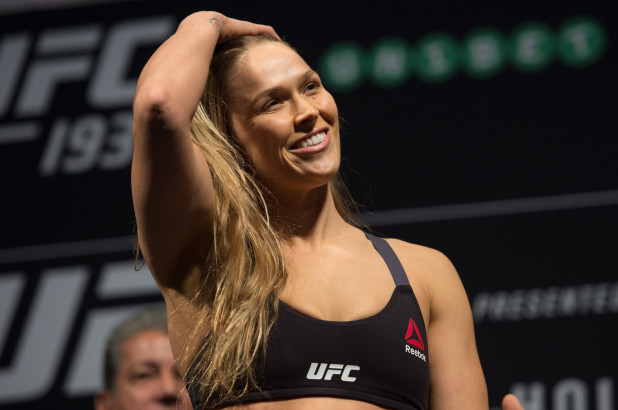
I don’t believe it would be accurate to call Ronda Rousey the best female fighter to ever step foot inside the UFC, but I think it would be fair to crown her as the most important, and if we’re being honest, she’s one of the most important fighters to ever fight in the UFC regardless of gender.
She made it to the promotional mountaintop before the UFC’s current golden goose Conor McGregor. She was able to convince UFC President Dana White to create a female division shortly after an infamous interview with TMZ where he said it would never happen.
But long before Rousey entered the UFC, she was someone to admire, and now she is no longer part of the roster, it is important to not use hindsight as a means to diminish her accomplishments.
Here are some common issues brought up by her detractors that need addressing:
1) She was never any good.
2) She never fought anybody.
3) She ran away when the going got tough.
So let’s dive in.
She was never any good
How could you possibly believe this if you’ve seen any of her fights before the Holly Holm loss? You don’t accidently beat people consistently in under a minute, especially if your method of execution is submitting people. Submissions require that a fighter set up the conditions for success. It’s not the same as winging a punch and getting lucky that it knocked your opponent out.
For a submission to work, one action has to lead to another in a sequence of events that has to be drilled and practiced over and over again by a performer of expert ability.
Rousey was an Olympic medallist in Judo before moving to MMA. When she decided to transition to her new sport, her ability to dominate was a combination effort that involved a skill set specialised and refined in a way that no other competitor had seen before from a woman in MMA, coupled with a type of athleticism that you still don’t see a lot of in women’s MMA.
To become an Olympic level athlete, you need to hit the genetic lottery and combine it with a psychotic level of competiveness. Rousey had both those in spades and a funny thing happens when you introduce that type of fighter into a division.
Everyone around them steps their game up. Which brings me to point No. 2.
She never fought anybody
A lot of those nobodies were and are still in the UFC today.
If you want to do a bit of MMA math, which is always fun, you can look at the two women who defeated Rousey and see the error in trying to discredit her level of competition.
Let’s start with Holly Holm. Holm will forever go down as the one who shocked the world and defeated Rousey first. She also has a loss to long-time Rousey rival Miesha Tate, who Rousey beat twice. Tate defeated Holm and took her title, a championship that Tate would eventually hand over to Amanda Nunes when she lost to Nunes at UFC 200.
You could make the case that Nunes is the current greatest female fighter to ever live based on what she has accomplished in her UFC tenure.
Now let’s talk about Nunes, the fighter who put the finishing touches on Rousey’s career when she knocked out the former champ at UFC 207. Nunes has losses to Cat Zingano, Sarah D’Alelio and Alexis Davis. Want to take a guess what all three of those women have in common? You guessed it, Rousey beat them too.
Rousey faced the best of the best and whoever the UFC deemed fit to put her up against with few exceptions.
Eventually, those that had the benefit of studying her game while she ruled the women’s bantamweight division were able to tailor their games to defeat Rousey, something Holm and her team explicitly told the media in the lead-up to their fight.
She ran away when the going got tough
This one is admittedly a little harder to reconcile because quite frankly, she had no interest in doing a song and dance once she knew she was done, and for some fans, that will never sit right.
But to understand Rousey’s ending you have to understand her beginning and journey.
In that interview with ESPN, Rousey talked about her Strikeforce days and specifically the lead-up to her Strikeforce title fight where she challenged Miesha Tate for the belt. She referenced a time where she was sitting on her computer doing social media, and talked about how she had studied how things became viral.
Some fighters have a natural understanding of how to promote themselves (Conor McGregor). Some have a certain physical appeal and don’t have to work that hard (Brock Lesnar). Rousey had a combination of both. She wasn’t the smoothest on the mic and she was a female, which at the time she broke through was a major hindrance to her ability to compete in a UFC that didn’t employ female fighters.
She developed a following by finding a way to stand out. She scowled on her way to the cage, she talked trash in a way that the women’s side of the game had fully seen yet. She fought to finish fights quickly and violently and if you need a reminder of what that looked like go look up her Strikeforce fight with current Bellator featherweight champion Julia Budd.
Rousey found a way to stand out and took the part of who she was that probably should have held her back the most, being a woman, and turned into one of her greatest appeals.
She became an inspirational hero to woman of all ages. Her childhood story involved two major things that stood out. Rousey struggling to talk early in life because she was born with the umbilical cord wrapped around her neck, depriving her of oxygen that delayed her speech development, and her father’s suicide.
I’ll never forget watching UFC Primetime when she spoke of her father and she was brought to genuine tears when trying to explain why talking about her father felt like exploitation.
She hit the promotional game hard and she had to because the only way to validate bringing a women’s division to a sceptical UFC audience was to blow it out of the park and she exceeded almost everyone’s wildest expectations in that regard.
But that kind of relentless drive can only last so long.
Rousey often talked about how she felt she needed to get the UFC to a place where when she left the UFC, female divisions would be able to survive without her. That burden drove her to do the media she did, but I firmly believe it has also led to her deciding she’s done more than her fair share and doesn’t owe anything to anyone anymore.
Fair enough.
So as Rousey takes her rightful place in the hall of fame at the UFC Headquarters in Las Vegas, it is wise to go back in time and try to remember Rousey’s rise and success for what it was, utterly unique and special and undoubtedly worthy of being immortalized.

 FightPost: Boxing & MMA News