David Haye: On Reflection
The announcement was inevitable but David Haye recently announced his retirement from the ring after a 16-year professional career.
“As I reviewed my life and physicality it’s not what it needs to be to compete on the world level as a heavyweight or cruiserweight. The boxing gods will no longer bless me with that freakish power and speed I’ve had since a kid. It’s gone now and it’s time to bow out of the game. I’m happy and healthy and my family are financially secure, so it’s job well done.”
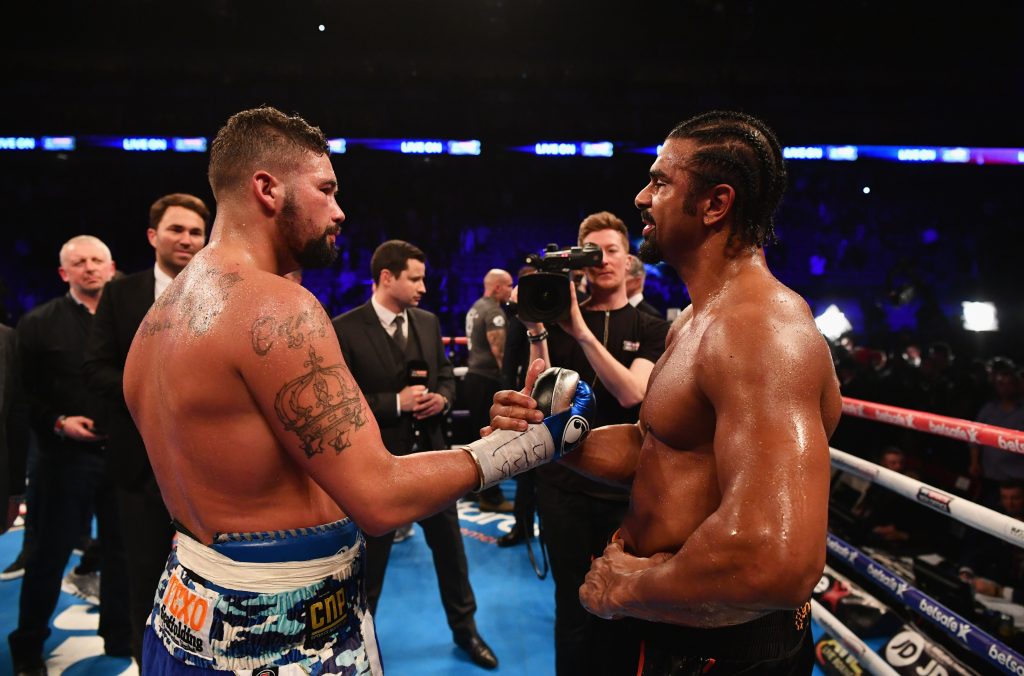
Haye leaves the sport on the back of the two losses to Tony Bellew, but that shouldn’t be what we remember him for. The Haye that lost twice to Bellew wasn’t the Haye of old, nowhere near. The timing and the explosiveness were gone and I think Haye knew it was long gone even before he made his last ring walk at the O2 in May.
Personally, I would rather remember Haye for his prime and not for his decline. Haye leaves behind a legacy that few fighters can match.
Far better fighters than Haye didn’t know when to quit, the two greatest ever Sugar Ray Leonard and Muhammad Ali both left the sport on the back of two defeats, Haye is just another to add to the many. Fighters are the last to know, or probably more accurately the last to admit it’s over. Fighters rarely leave the sport on their own terms, they all seem to think that they are the one that is different, that an erosion of skills due to father time doesn’t apply to them. In the end, they learn it applies to us all.
Yes, Haye could have achieved more, but he still achieved plenty. Haye was the first British boxer to reach a final of the World Amateur Championships when he won a silver medal in 2001.
Haye turned pro the following year and despite an early setback against Carl Thompson, Haye won the WBA and WBC cruiserweight titles in 2007 from Jean-Marc Mormeck. Despite being dropped early in the contest, Haye recovered and stopped his opponent in 7 rounds, an early sign of heart that many with little evidence seem to question.
Haye was expected to move to heavyweight straight away as the cut to cruiserweight was notoriously difficult, but he stayed around for one more fight at the weight against Enzo Maccarinelli. Haye added the WBO belt to his collection when he beat the Welshman in March 2008 in 2 rounds at the O2 Arena. Haye left the cruiserweight division holding 3 of the 4 major belts.
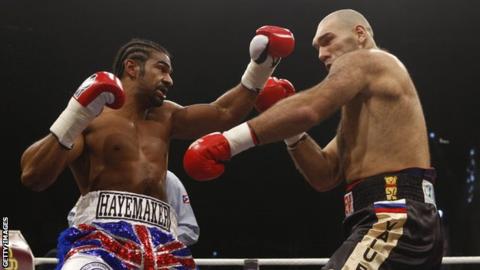
A move to heavyweight meant no end to the success and after a win over Monte Barrett, Haye challenged and defeated Nikolai Valuev on points in Germany in 2009 and with it, he became the WBA heavyweight champion of the world.
Haye defended his belt twice against John Ruiz and Audley Harrison before the highly anticipated unification fight with Wladimir Klitschko in 2011. Haye knew how to play the PR game, and while some might not appreciate some of Haye’s antics in the build-up, it did the trick, and the fight with Klitschko was hugely anticipated with PPV numbers to match.
Sadly for Haye, it ended in defeat and the infamous toe reference. Haye was ridiculed for blaming his defeat on the toe, a little unfairly perhaps, but he would have been better not saying anything, however much it restricted his performance.
A short-lived retirement ended with the grudge match with Dereck Chisora a year later. The last real Haye like performance we ever saw, it resulted in Haye coming away victorious in 5 rounds. If there was ever a moment Haye should have ended his career it was then.
Fights with Manuel Charr and Tyson Fury were cancelled as a result of injuries, and when he finally got back in the ring in 2016, the opponents were widely criticised. The two fights with Bellew told everyone including Haye, that his days in the sun were over.
Even in the defeats to Bellew, Haye showed incredible heart, which some thought he lacked. In the 1st fight Haye severely restricted by an Achilles injury, was effectively a one-legged fighter for the latter part of the fight, but still he gamely hung in there, desperately trying to find the one big punch to turn the fight around, a lesser man would have quit long before Shane McGuigan threw the towel in. Haye to his credit never blamed the injury, lessons no doubt learned from before.
Some questioned his commitment to the sport, and injuries in the latter part of his career effectively finished Haye as a fighter long before Bellew did, but in his prime Haye was some fighter. Very few boxers leave the sport on their terms most think they are the one to defy the aging process but old father time wins every time, but Haye in many ways did. Haye wanted to know just what was left and like Ricky Hatton when he returned and lost to Vyacheslav Senchenko in 2012, to finally let it go you have to know.
“I saw punches coming but wasn’t quick enough to avoid them. I created openings but lacked the speed and agility to capitalise on them. Quick, bread and butter counterattacks, the sort I’ve effortlessly thrown since my teenage years, are no longer in my armoury. And when I take shots, they now shake me to my boots.
The things I used to be able to do in the ring – instinctively – now exist only in my mind and in video clips of my old fights”.
The above comments from Haye speaking about the Bellew rematch tells us there will be no more, Haye knows it’s over forever.
In the end, Haye got out of his body what he could and with the amount of potentially career-threatening injuries Haye has suffered over the recent past, Haye deserves credit for even getting back in to anywhere near fighting shape. But to compete at the elite level you need more, the mind might be willing but even a minimal slide is enough to finish you in the toughest sport of them all.
Haye brought so much to the sport and leaves us with so many great memories and I doubt the latter part of his career will harm his legacy too much in the passing of time. Haye brought excitement back to the heavyweight division when it was most needed, he had the sort of power which could end a fight at any moment, a very rare gift. Haye is the greatest British cruiserweight ever, and probably in the top 3 heavyweights also, that is how good Haye was.
Haye leaves the sport with a 28-4 record.

 FightPost: Boxing & MMA News